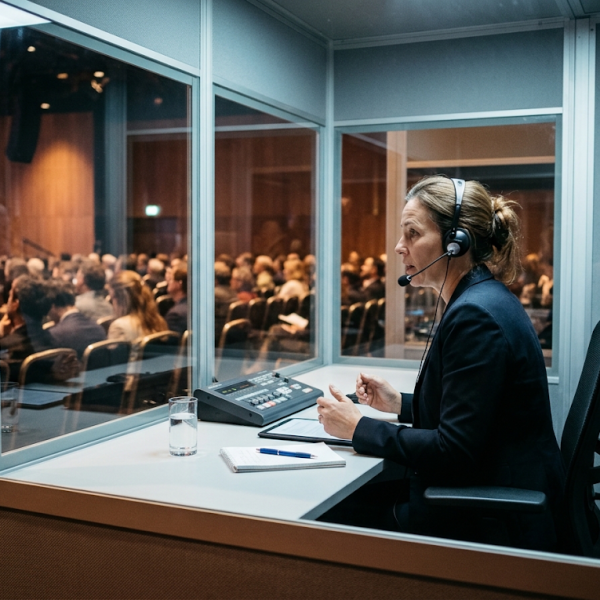
When people from different languages must talk in real time, a translated document is no longer enough, and an interpreter steps in. Yet event organisers, lawyers and hospital managers often ask for an interpreter without knowing which mode they need. The choice between simultaneous and consecutive interpreting affects the cost, the schedule, the equipment and even the atmosphere of the meeting. Simultaneous interpreting saves time and suits large events, while consecutive interpreting offers precision and suits smaller, more personal conversations. This article compares the two methods, explains how to prepare and offers practical advice for booking a qualified professional.
How Consecutive Interpreting Works
In consecutive interpreting, the speaker talks for a short period, perhaps one to five minutes, and then pauses while the interpreter renders the message in the other language. The interpreter often takes notes using a personal system of symbols that captures ideas, numbers and names. Because the conversation moves in turns, the process takes roughly twice as long as a meeting without interpretation. In return, it needs little equipment and allows participants to think, clarify and respond. It is common in business negotiations, interviews, medical appointments, site visits and small press events, where accuracy and rapport matter more than speed.
How Simultaneous Interpreting Works
Simultaneous interpreting happens almost in real time. The interpreter listens through a headset and speaks into a microphone a few seconds behind the speaker, while the audience hears the translation through receivers. The work is mentally exhausting, so interpreters usually work in pairs and swap every twenty or thirty minutes. Professional booths, microphones and sound systems are needed, and organisers must plan for them in advance. This mode is the standard for conferences, assemblies, trainings and broadcasts, because it allows hundreds of listeners to follow the programme without interrupting the flow of the event.
Other Formats Worth Knowing
Whispered interpreting, also called chuchotage, is a form of simultaneous interpreting where the interpreter sits next to one or two listeners and speaks quietly in their ear. It needs no equipment but is suitable only for very small groups. Remote interpreting uses video or phone platforms and has become popular for short notice meetings, hospital calls and virtual events. Sight translation, where the interpreter reads a document aloud in another language, is common in courts and clinics. Each format has its own strengths, and a good provider will explain which one fits your situation instead of selling the most expensive option.
Qualifications and Standards
Fluency in two languages does not make someone an interpreter. The job requires training in memory, note taking, public speaking and ethics, as well as deep knowledge of the subject. Professional associations such as AIIC publish standards on working conditions, team size and confidentiality, and they help clients understand what to expect from a conference interpreter. Ask about experience in your field, request references and make sure that the person is bound by a confidentiality agreement. In legal and medical settings, additional certification may be required by law or institutional policy.
Preparing the Interpreter for Success
Send the programme, presentations, glossaries and speaker names several days before the event. Technical terms, acronyms and product names should be explained in advance so that the interpreter can research them. Encourage speakers to talk at a natural pace, avoid long jokes and pause between ideas. If a speaker reads a prepared text, share the script. Brief the interpreter on the purpose of the meeting, the participants and the sensitive topics. A well prepared interpreter delivers more accurate and more relaxed work, and the audience feels the difference immediately.
Spanish and Other Widely Used Languages
Demand for Spanish interpreting is high in healthcare, education, courts and business, and the quality of the service depends on matching dialect, subject and setting. A provider of certified Spanish translator and interpreter support can advise on whether you need written translation, live interpreting or both. For Ukrainian speaking clients, an experienced ukrainian translator can support meetings with authorities, schools, employers and clinics, while respecting cultural sensitivities and the particular terminology of each setting.
Budget, Timing and Booking
Interpreters are usually charged by the hour or by the day, and travel time, preparation and equipment add to the total. Book as early as possible, particularly for rare language pairs and busy seasons. Confirm the start and end times, breaks, the number of interpreters and the technical requirements. Check whether recordings are allowed, because interpreters may have rights over their work. After the event, ask participants for feedback and share it with the provider. Clear communication before, during and after the assignment is the best way to build a long relationship with professionals who help your guests understand every word and feel welcome.
Common Booking Mistakes
Organisers often hire a bilingual colleague at the last minute, forget to arrange breaks, or ask a single interpreter to cover a full day of simultaneous work. Others share materials only minutes before the start, which makes accuracy difficult. Avoid these traps by writing a short brief, confirming the team size and testing the equipment before guests arrive. A calm, well organised setup lets the interpreters focus on language, and it gives your participants a smooth and professional experience from the first minute.